
0-The origins of the Ragdoll
The true story of the Ragdoll, Josephine and Ann Baker.
The Ragdoll,
the True Story of a Legendary Cat
Prologue · The Origins
A miracle. People often speak of mystery when referring to the birth of the Ragdoll. That is not the word I would choose. The Ragdoll is the result of a miracle. Admittedly, from the very beginning—as with many other breeds—rumours circulated claiming it had been created by crossing well-known established breeds. Yet extensive research and a careful study of pedigrees strongly suggest a completely different origin.
The Legend
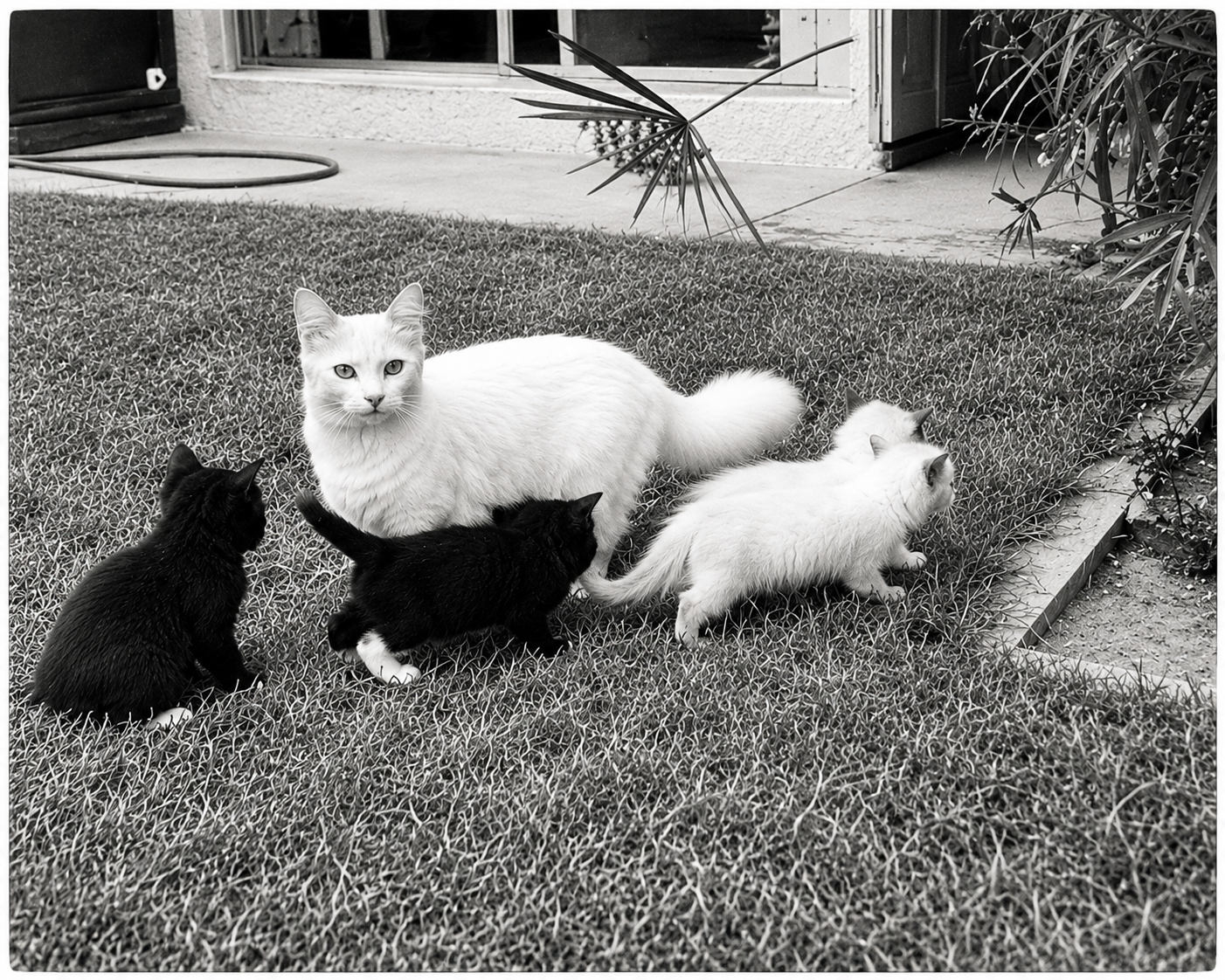
With only Josephine's two colourpoint kittens—Raggedy Ann Buckwheat, a black female of Birman type born to Blackie and Josephine, and Raggedy Ann Fugianna, a bicolour female sired by Daddy Warbucks—together with the magnificent Daddy Warbucks himself, also a son of Josephine, Ann Baker managed, through courage, determination and perhaps a touch of madness, to keep her course against every obstacle and steer her remarkable little ship, with its extraordinary passengers, safely to our own time.
Ann Baker
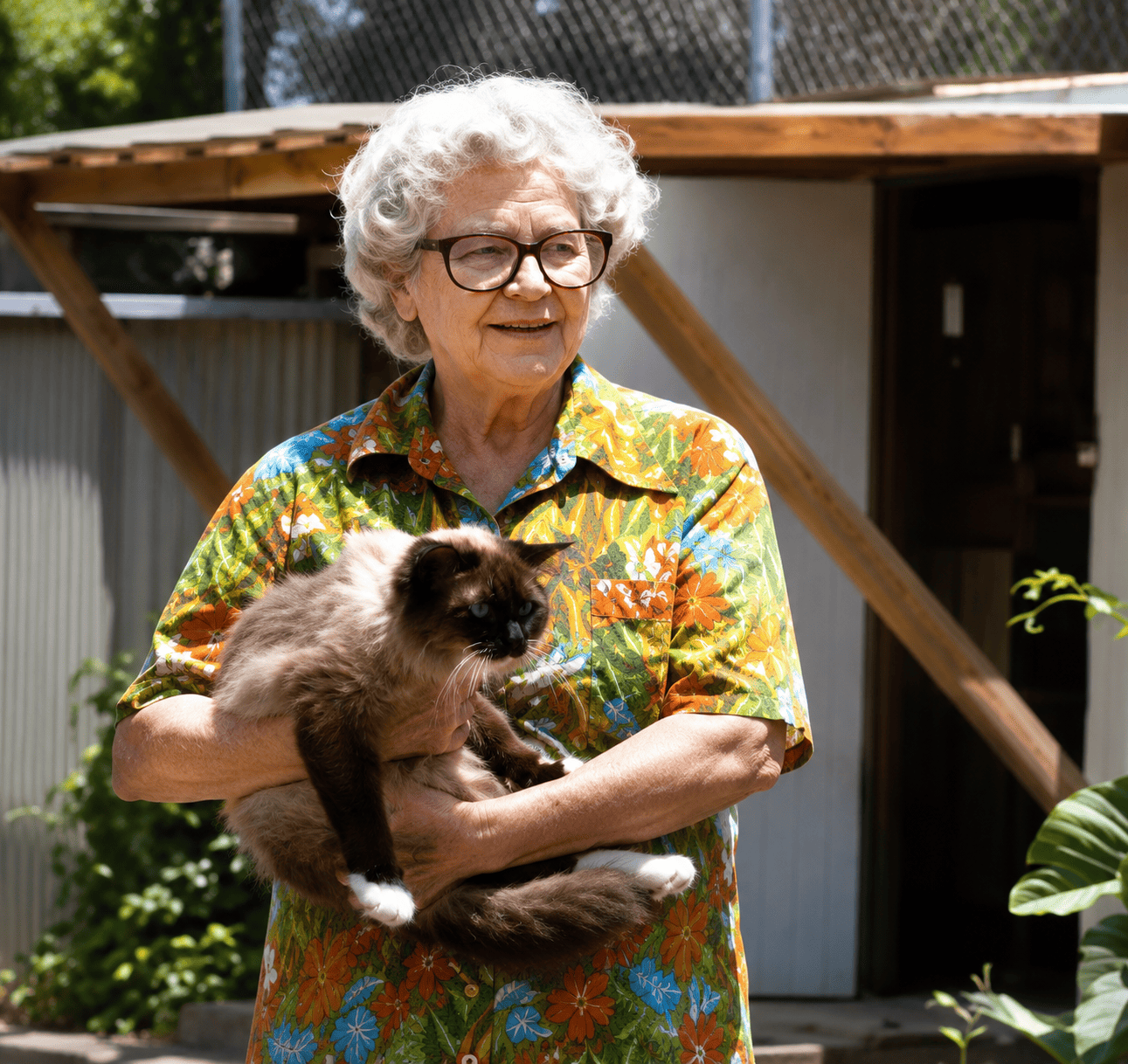
It is impossible to tell the story of the Ragdoll without speaking of its founder, Ann Baker. The story that follows is hers—only a part of it, however, for she enters the stage at around the age of forty-seven, at the very moment the Ragdoll itself appears, although she was born around 1918.
According to a newspaper article, she worked as an engineer during the 1950s. After suffering a serious head injury, she ran a cleaning business before eventually founding her cattery. Then chance brought Josephine into her life, and the destiny of both women changed forever.
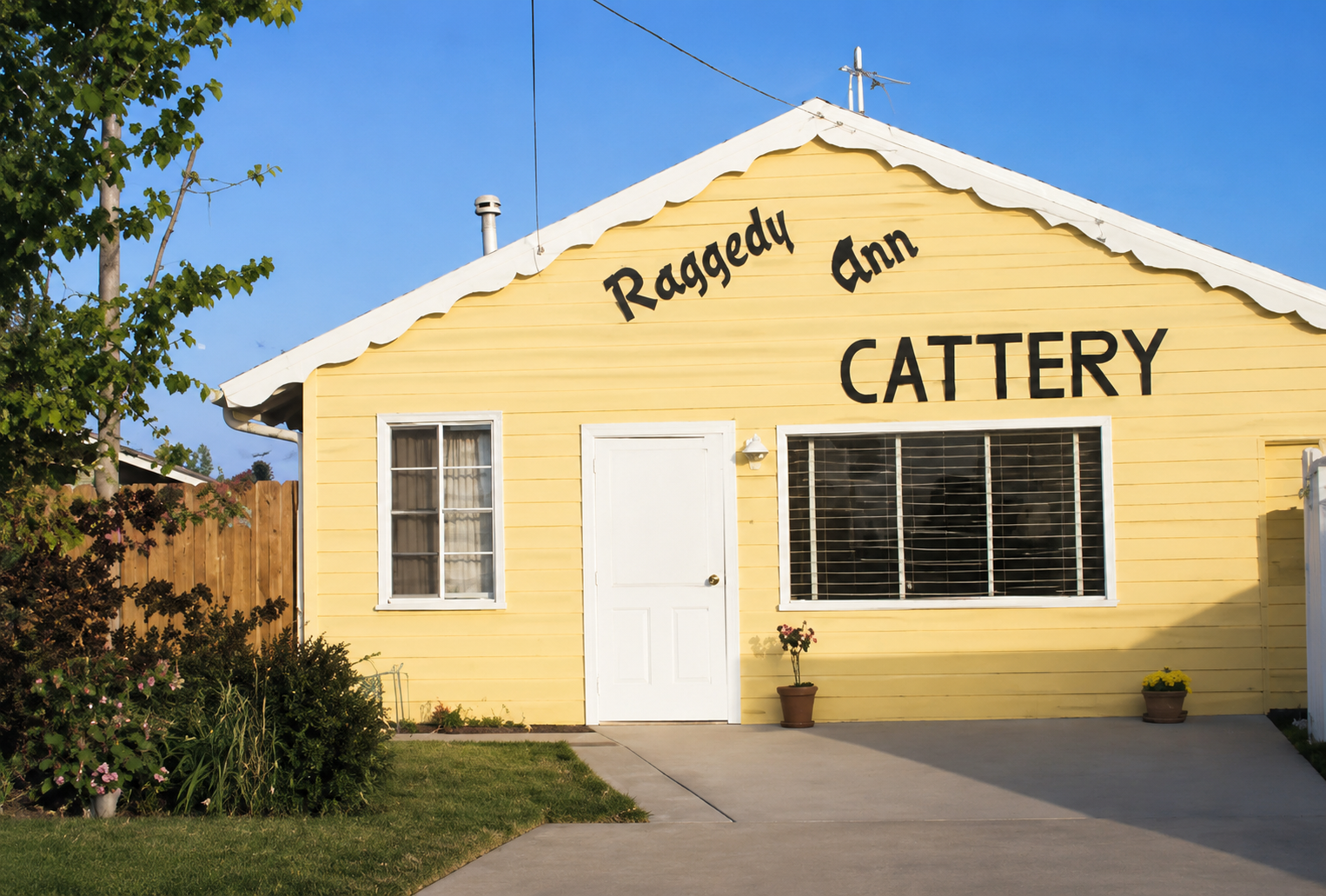
Her name is also inseparably linked with the Raggedy Ann Cattery, the IRCA, and the feline breeds Honey Bears, Hobby Cat Ragdolls, Tu's Ragdolls, Miracle Ragdolls, Cherubims, BabyDolls, Angels, Symonese and, finally, Catenoids. Ann Baker kept much of her knowledge in her own memory. Her constant fear of being robbed of her ideas led her to keep part of both her own story and that of the Ragdoll shrouded in secrecy.
Over the years, through countless interviews and an endless stream of letters, she gradually revealed fragments of that story. Even today, however, it is impossible to know how much of this immense iceberg she truly chose to expose, especially since her account evolved from one interviewer to another and changed over time.
About This Chronicle
I never had the opportunity to meet Ann Baker personally. The information gathered here therefore comes from second-hand sources, and sometimes even further removed. Every source used in this research is fully referenced. Whenever possible, I have tried to trace the story back to those who witnessed this extraordinary adventure firsthand.
My principal source has been the historical research of RFCI historian Wain Pearce, based on the extensive collection of documents entrusted to the organization by Blanche Herman, one of the great figures of the Ragdoll world and a close confidante of Ann Baker, before her passing in 2006.
I also relied on the Definitive Guide to Ragdolls, a legendary English-language reference that has long since become virtually impossible to obtain. The last known copy to appear on the market sold for around €500.
More challenging to analyse was a DVD filmed by Dave Chambers in Ann Baker's own office, in which she delivers a series of lectures on the Ragdoll—in unmistakably Californian English.
I make no claim to prove every assertion made by one side or the other, nor to rewrite the history of the Ragdoll. One day, quite simply, I crossed paths with this breed. At the end of that path lay a tangled Ariadne's thread, written almost entirely in English. I decided to unravel it, piece by piece, and translate it, hoping to guide readers through the remarkable story of a woman who could be stubborn, authoritarian, difficult and often controversial, yet to whom we owe these extraordinary Ragdolls—and who deserves, beyond any doubt, our gratitude.
In the articles that follow, passages in italics reproduce Ann Baker's own words as recorded in interviews, testimonies and correspondence exchanged with Jill A. Hill. The boxed extracts are taken from Ann Baker's two IRCA publications: IRCA and the Ragdoll Documentary (1978) and IRCA and the Honey Bears Documentary (1980).