Myth or reality?
Almost everything has been said about the Ragdoll: that it is insensitive to pain and can supposedly undergo surgery without anaesthesia; that its magnificent coat never mats; that when picked up it becomes as limp as a cushion. It is our hope that this website will help you separate fact from fiction, and myth from reality.
How it all began
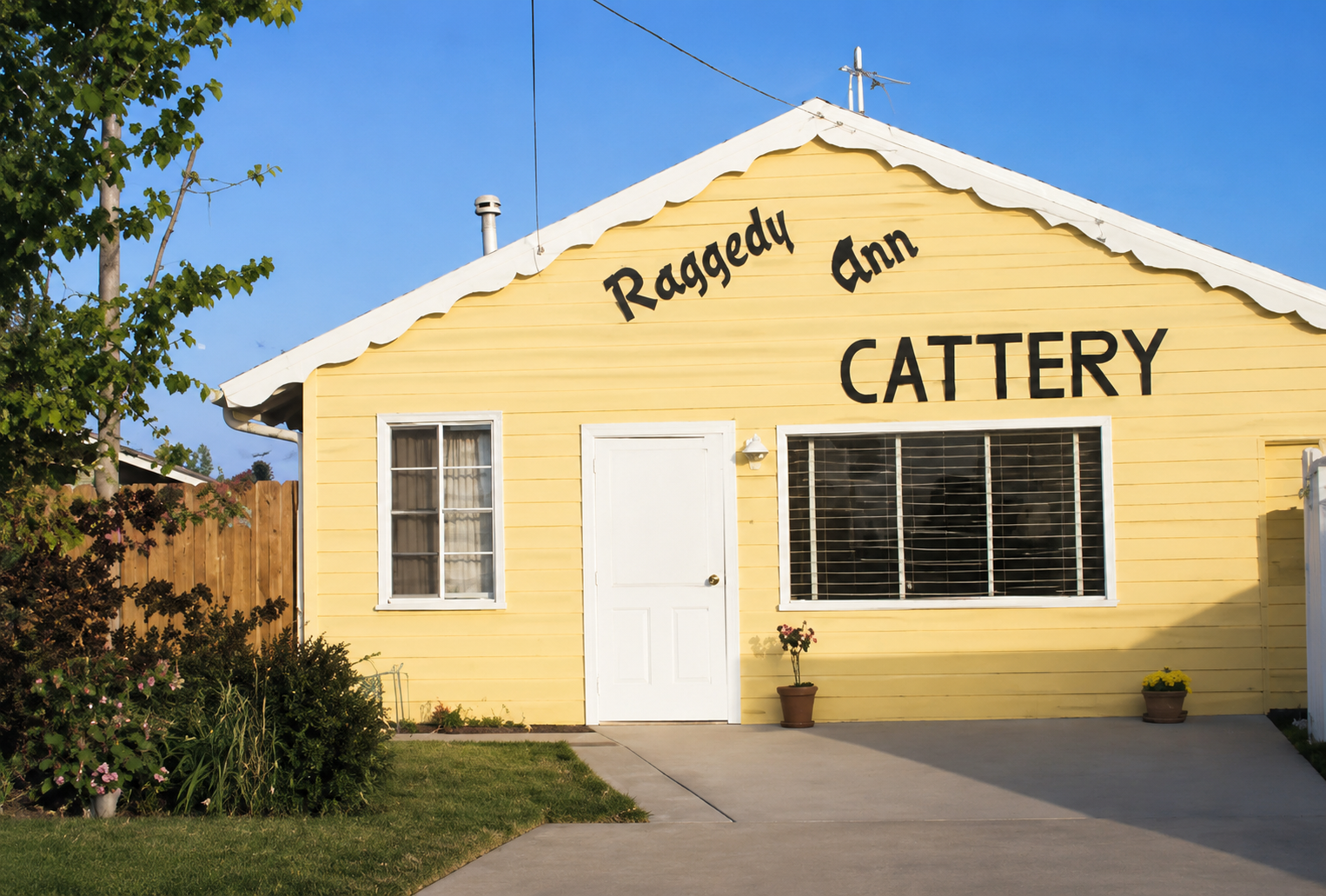
The origins of the Ragdoll are almost as mysterious as the breed's temperament itself. The story is somewhat tangled and, in places, seems to belong more to legend than to documented history. What we do know is that the Ragdoll first appeared in Riverside, California, sometime between 1960 and 1965, under the guidance of a woman named Ann Baker, and that it all began with an ordinary white semi-longhaired cat named Josephine.
Chaotic beginnings
Josephine was a white semi-longhaired cat belonging to the Pennels, neighbours of Ann Baker. She wandered freely and produced many litters over the years. One day, she was struck by a car and severely injured. After receiving treatment at a nearby university, she eventually recovered. Kept indoors during her convalescence, she gradually became more domesticated and developed a taste for family life.
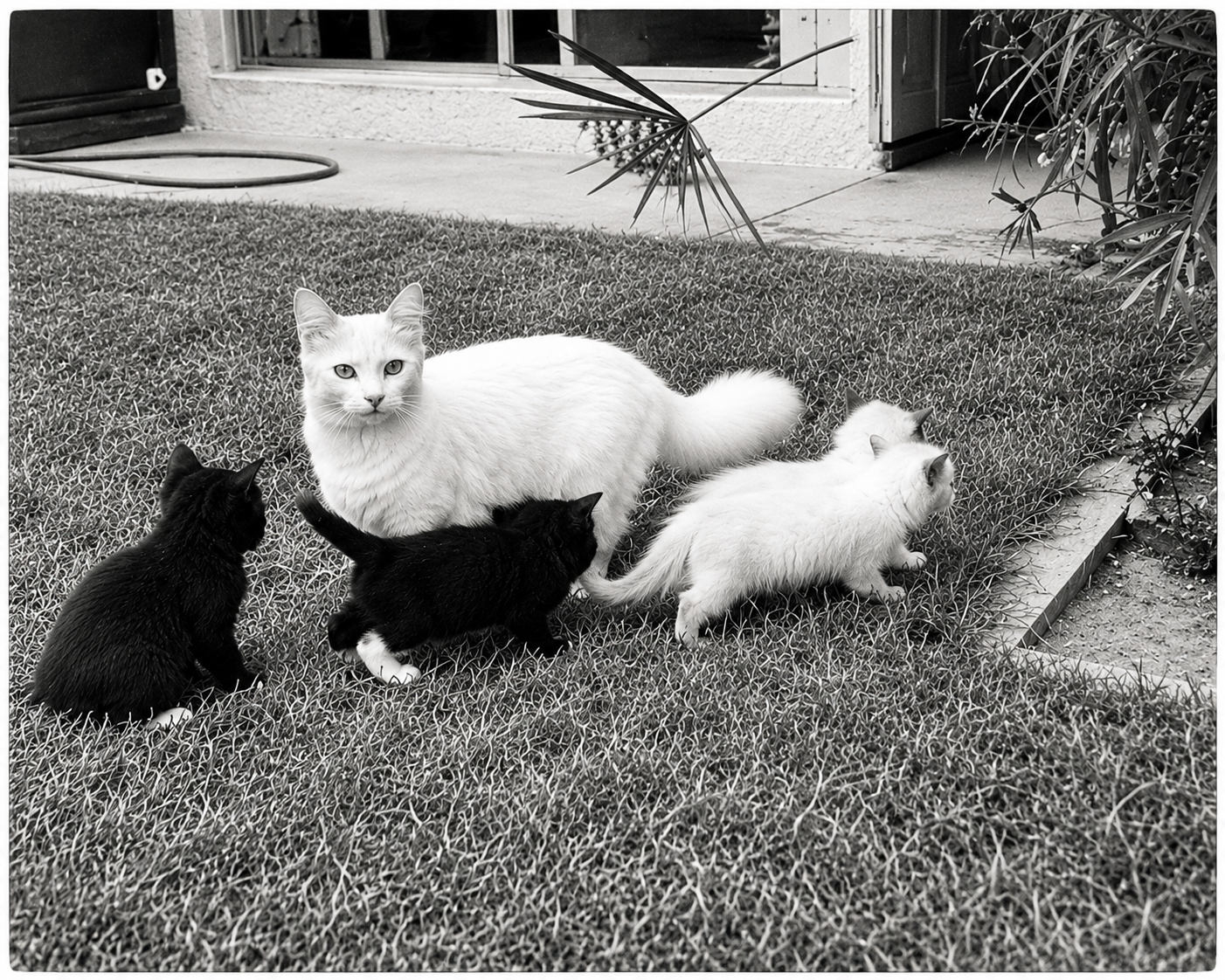
Josephine's early kittens were semi-feral, much like their mother. After the accident, however, everything seemed to change. Her kittens became remarkably gentle and sociable, so affectionate and clingy that, according to Mrs Pennels, they could be quite a nuisance. What had changed, and why? No one knows. Speculation about a genetic mutation, whether induced by the accident or the result of experiments conducted at the university, has never been supported by evidence. Nevertheless, Ann Baker found these kittens so unusual that she decided to develop an entirely new breed from them.
Ann Baker acquired two of Josephine's kittens: Buckwheat, a black female of Birman type, and Raggedy Ann Fugianna, a bicolour female. Fugianna's father was Daddy Warbucks, himself a son of Josephine and owned by Mrs Pennels. He was an impressive cat, resembling a giant mitted Birman with a white blaze on his nose and a white tip on his tail. These three cats became the foundation of the breed. Tragically, after a subsequent litter, following an altercation between cat and family dog, Mr Pennels killed Josephine and kittens.
Once her breeding programme was well established, Ann Baker introduced a concept unheard of in the cat fancy: she trademarked the name Ragdoll, ensuring that every kitten sold generated royalties for her. She ruled the small Ragdoll world with an iron hand and eventually began promoting increasingly eccentric genetic and cosmological theories, claiming that Ragdolls were related to raccoons, humans and even extraterrestrials.
The birth of the RFCI
Tired of Ann Baker's restrictions, several breeders separated from her system. Laura and Denny Dayton became the most emblematic figures of this movement.
They founded The Ragdoll Society, later the Ragdoll Fanciers Club and then the Ragdoll Fanciers Club International, in 1971, with the goal of introducing the breed to cat associations and shows.
Weary of the strict breeding conditions imposed by Ann Baker, a handful of breeders who had obtained their Ragdolls before the trademark restrictions were introduced chose to break away. Among the most prominent were Laura and Denny Dayton.
In 1971, they founded The Ragdoll Society, later renamed the Ragdoll Fanciers Club and now known as the Ragdoll Fanciers Club International (RFCI), with the aim of introducing the breed to the major cat associations and the show world.
Patricia "Pat" Brownsell of Patriarca and Lulu Rowley of Petil-lu pioneered the Ragdoll breed to Europe. In 1981, they imported the first Blossom Time Ragdolls into the UK from Laura and Denny Dayton. Through their respective catteries, Patriarca and Petil-lu, they played a pivotal role in establishing and promoting the breed throughout Europe. The influence of both breeders can still be seen today in countless European pedigrees, and their names remain closely associated with the early development of the Ragdoll outside North America.
Ann Baker died in 1997, bitter and disillusioned by what she considered a betrayal. Her trademark still exists today, along with the breeding restrictions she imposed, although few breeders continue under that system. Most modern Ragdolls descend from the breakaway lines and are represented within the RFCI.